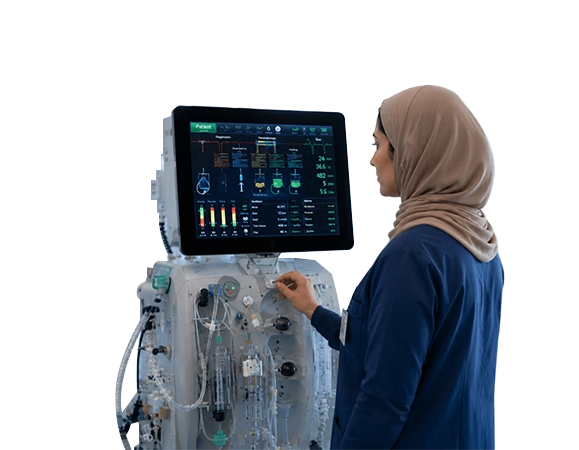
Because the lungs can grow used to relying on the device, a ventilator is rarely removed all at once. Instead, as a patient’s condition improves, a structured weaning period gradually reduces support while spontaneous breathing is tested and monitored.
The pressure delivered through the tube may be lowered, and spontaneous breathing assessed using approaches such as:
- Pressure-support trials
- A T-piece (T-tube) test
- Synchronized intermittent mandatory ventilation (SIMV) — the ventilator delivers a set number of breaths, then pauses to detect spontaneous breathing, stepping back in only when needed, so the patient gradually regains independent breathing
Where a patient isn’t yet ready, weaning continues gradually — the team identifies the specific factors behind ventilator dependence and works on them to support progress toward independent breathing.
Before weaning can begin, a patient usually needs to meet the criteria of two assessments:
- A wean screen — performed daily to review the patient’s weaning parameters; the underlying lung condition must be stable and key respiratory measures within a safe range
- A weaning performance trial — patients with stable hemodynamics, sound neuromuscular function, and the ability to breathe spontaneously are the most likely to pass
Building respiratory strength is an important part of preparation. Patients benefit from good nutrition — a diet rich in nutrients, vitamins, and minerals — and from avoiding, where clinically appropriate, medications that can add to muscle weakness.
Throughout, the team also attends to factors such as cardiac function, anemia, and acid-base balance to improve oxygen-carrying capacity, with the aim of helping patients breathe comfortably without becoming exhausted.
Caring for ventilator-dependent patients calls for specialist expertise, advanced equipment, and a coordinated team. Our respiratory specialists, physicians, nurses, and therapists work together to deliver safe, expert ventilation care and structured weaning — supporting each patient’s comfort, safety, and progress toward greater independence.
Your recovery matters to us, and we stay with you at every step of the journey. Care at Cambridge Hospital is one connected path across inpatient, outpatient, home, and in-school services — supporting every stage of recovery.