Cerebral Palsy Program

Intensive neuro-rehabilitation using the Kozyavkin Method — brought to the GCC for the first time at Cambridge Hospital

Overview

Cerebral palsy is a non-progressive neurological disorder caused by damage to the brain before, during, or shortly after birth. The original injury doesn’t worsen over time, but the degree of disability can change as a child grows, because cerebral palsy affects muscle structure, movement, coordination, and internal organ function. Our specialist Cerebral Palsy Program provides comprehensive management and tailored intervention — improving mobility, building muscle strength, and supporting overall wellbeing — so every patient can move toward their fullest potential.
Our Cerebral Palsy Program provides specialist, multidisciplinary rehabilitation that helps children and adults improve mobility, ease muscle stiffness, and gain greater independence in daily life.

With personalized therapy plans and advanced techniques, we help each patient reach their highest functional potential.

Prof. Kozyavkin

Cambridge Hospital is the only provider in the GCC to offer the Kozyavkin Method — a globally recognized, intensive neuro-rehabilitation program for cerebral palsy and other neurological conditions in which increased muscle tone and spasticity affect movement.

Developed by Professor Kozyavkin, it has one aim: to improve quality of life for every patient living with a neurological disorder. Delivered in intensive cycles of therapy, it complements traditional approaches — helping manage tone and spasticity, improve joint movement and control, and support tissue health through better blood flow — so each child can work toward their motor milestones and greater function.

Cerebral palsy is the condition most commonly treated, but the Kozyavkin Method can benefit a range of neurological and musculoskeletal conditions:

  • Cerebral palsy in all its forms — including quadriplegia, spastic diplegia, double hemiplegia, hemiplegia, hemiparesis, paraparesis, and atonic, astatic, mixed, and hyperkinetic forms
  • Delayed motor development in young children
  • The effects of traumatic brain injury and the residual effects of cerebrovascular lesions and CNS infections
  • Osteochondrosis and spondylosis with severe muscular tonic syndromes
  • Secondary vertebral conditions and non-inflammatory peripheral joint diseases (in remission)
  • Diseases of the peripheral nervous system (in remission)

Care is shaped around each child and may include:

  • Physiotherapy
  • Psychological / psychiatry therapy
  • Therapeutic exercises
  • Medication management
  • Teaching coping mechanisms and self-management skills

Cerebral palsy affects posture, movement, and coordination. As a child grows, muscles can shorten and tighten and tone can rise — which can create the impression that the condition is worsening — and children often experience developmental delays. It can also affect the body’s deep sense (the receptors in joints, tendons, and muscles that signal posture, balance, and movement), which is essential both to carrying out movements and to learning new ones.

This is why effective, lifelong management matters — and why the Kozyavkin Method addresses not only the peripheral muscles and joints but also re-educates the movement and musculature of the spine.

Our multidisciplinary team — physiotherapists, occupational therapists, and speech-language pathologists — builds tailored plans that improve mobility, coordination, and physical function through intensive, evidence-based rehabilitation.

We prioritize early intervention, work closely with families, and use advanced, engaging technology (therapeutic games and interactive exercises) that motivates patients while encouraging the neuroplasticity essential to recovery — tracking progress closely and adapting each plan as needed.

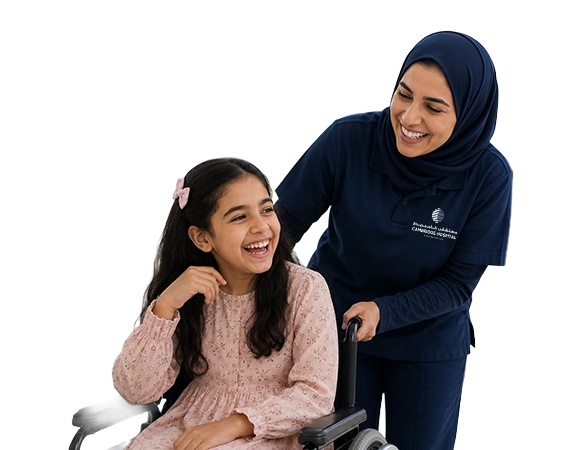
Your recovery matters to us, and we walk with you at every step of the journey. Care at Cambridge Hospital is one connected path across inpatient, outpatient, home, and in-school services — supporting every stage of recovery.

Your recovery matters to us, and we are with you every step of
the journey.

Care at Cambridge Hospital is a connected journey across inpatient, outpatient, home, and school services, supporting every stage of recovery.

Expert Care, Trusted Doctors

Our specialists are committed to providing the right care at every stage of your journey

Meet Our Team