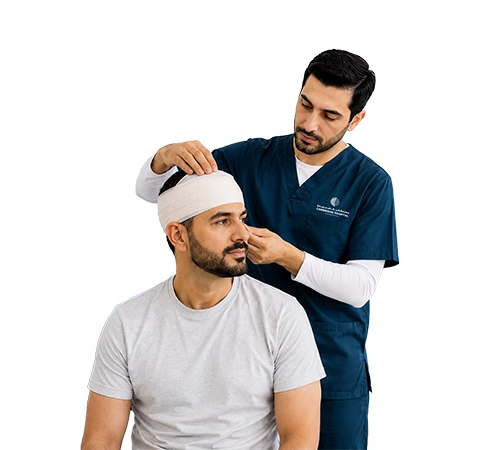
Traumatic Brain Injury rehabilitation is specialized care for people whose movement, cognition, behavior, speech, or everyday function has been affected by a head injury. At Cambridge Hospital, our TBI rehabilitation program supports recovery after mild, moderate, and severe brain injuries caused by falls, accidents, or other trauma.
A coordinated, interdisciplinary team delivers care along a single structured pathway, uniting medical management with physical, occupational, speech-language, and cognitive therapy.
Every program is built around personalized, measurable goals — helping patients regain independence, improve daily function, and rebuild confidence.
Our rehabilitation brings physical, cognitive, and emotional recovery together:
- Physical therapy — building strength, balance, flexibility, and coordination
- Occupational therapy — relearning daily activities such as eating, dressing, bathing, toileting, and moving about safely
- Speech therapy — supporting speech, language, and cognition, and monitoring safe swallowing
- Cognitive therapy — improving memory, attention, judgment, planning, perception, thinking, and learning
- Psychological counseling — building coping skills, strengthening emotional wellbeing, and rebuilding relationships
Rehabilitation is a key part of recovery for TBI patients. Once a patient is discharged from hospital after their condition has stabilized, TBI rehabilitation becomes essential to a full recovery.
Depending on each patient’s medical needs, there are two main pathways for post-hospital care:
- Long-term care facilities — for patients who have stabilized after a traumatic brain injury but still depend on ventilators or constant nursing care.
- Rehabilitation centers — for TBI patients who are off ventilators but still need support with daily activities, working with physical and occupational therapists.
A brain injury can change life in a moment — but with the right rehabilitation, meaningful recovery is possible. Our multidisciplinary teams work side by side to help patients rebuild function, regain independence, and move forward with confidence.