Neurorehabilitation helps the nervous system recover and reorganize after injury or disease. The brain and nervous system have a remarkable capacity to adapt — forming new connections to compensate for damage.
Structured, intensive rehabilitation harnesses this capacity, retraining movement, speech, cognition, and the skills of daily living.
At Cambridge Hospital, neurorehabilitation brings medical care and specialist therapy together in one coordinated program, so progress in one area reinforces progress in others.
Our neurorehabilitation program supports recovery across a wide range of neurological conditions, including:
- Stroke — ischemic and hemorrhagic stroke, and transient ischemic attack (TIA)
- Traumatic brain injury (TBI) and spinal cord injury (SCI)
- Multiple sclerosis (MS) and other demyelinating conditions
- Neurodegenerative conditions — Parkinson’s disease, Alzheimer’s disease, Huntington’s disease
- Neuromuscular and neurodevelopmental disorders — Bell’s palsy, peripheral neuropathy, muscular dystrophy, myasthenia gravis, Guillain-Barré syndrome, cervical spondylosis, carpal tunnel syndrome
- Neurological infections — meningitis, encephalitis, and their after-effects
- Functional neurological symptoms — balance and coordination difficulties, dizziness, and related conditions
Recovery from a neurological condition takes a coordinated team. Depending on each patient’s needs, the program may involve:
- Neurologist / neurosurgeon — diagnosis and medical management of the nervous system
- Physiatrist (rehabilitation physician) — directing the rehabilitation plan
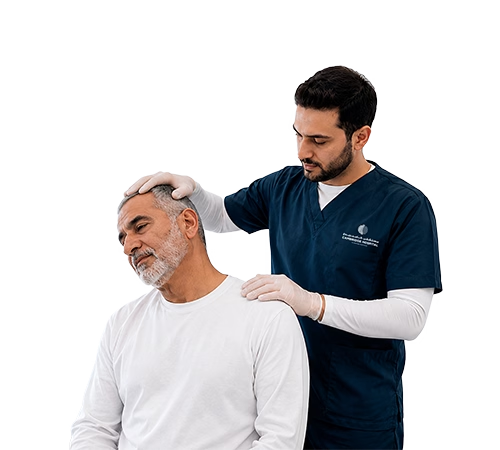
- Physical therapist — restoring movement, strength, and mobility
- Occupational therapist — rebuilding the skills of daily living
- Speech and language therapist — recovering speech, communication, and swallowing
- Neuropsychologist / psychiatrist — supporting cognition, mood, and behavior
- Case manager — coordinating the care journey and discharge planning
And, as needed: Social worker, Recreational therapist, Vocational counselor, and Chaplain
Our neurorehabilitation is built around a few core aims: supporting the nervous system’s natural repair and reorganization; retraining function through targeted, repetitive practice; helping patients adapt and rebuild independence; and using proven therapeutic techniques to strengthen neural pathways. Every plan is personalized to the patient’s condition, goals, and stage of recovery.
Depending on the patient’s condition and goals, our therapists may use evidence-based techniques such as:
- Constraint-induced Motor Therapy — encouraging use of a weaker limb by limiting the stronger one, rebuilding movement and neural pathways through intensive, repetitive practice
- Weight-supported treadmill Training — supported walking practice that helps re-activate lower-limb movement and build endurance
- Constraint-induced Speech Therapy — intensive, communication-focused therapy to support recovery from aphasia after stroke or brain injury
- Prism adaptation training for Spatial Neglect— a visual-spatial technique used to help correct spatial neglect, often seen after stroke
The specific techniques, intensity, and duration are always tailored to the individual by the clinical team.
A neurological injury can change life in an instant — but recovery is possible. Our team is here to help patients and families move forward, one goal at a time, with expert care and genuine support at every step.