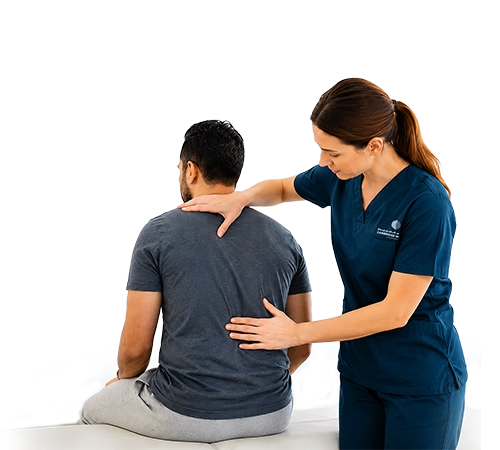
Spinal cord injury rehabilitation is specialized care for people whose movement, sensation, coordination, or daily function has been affected by damage to the spinal cord.
At Cambridge Hospital, our rehabilitation program supports recovery after injuries caused by trauma, accidents, falls, or medical conditions.
Care is delivered by a coordinated, interdisciplinary team working within one structured pathway — combining medical management with physical, occupational, speech‑language, and cognitive therapy.
Each program is built around personalized, measurable goals, helping patients improve mobility, rebuild daily living skills, strengthen independence, and adapt safely to changes in function.
Depending on its severity and location, a spinal cord injury may result in paraplegia (loss of movement in the lower body) or quadriplegia (loss of movement across all four limbs), and can affect sensation, strength, and daily function.
With rehabilitation, many patients restore some degree of movement, and our whole-person care supports the medical, emotional, and social sides of recovery together.
After assessing the level of injury and the challenges that may arise, our interdisciplinary team builds a plan to help you reach your maximum potential. Services include:
- Range-of-motion exercises
- Muscle strengthening
- Gait training
- Transfer training
- Diaphragm pacing system
- Assistive device training
- Fertility and sexuality management
- Wheelchair and seating clinic
- Family, patient, and peer mentoring
- Speech therapy
- Body-weight-supported training is also used to support the goal of regaining the ability to walk, and educational therapy supports recovery and long-term quality of life throughout the program
Patients typically move to rehabilitation once medically stable — a pivotal stage, when much of the locomotor training that supports long-term progress takes place. Because every injury is different, our team develops an individualized plan combining occupational and physical therapy.
Patients receive 15 hours of structured therapy across each 7-day period. Caregivers are encouraged to take part in sessions and are trained to support you at home — a strong support system is one of the most important factors in recovery.
Your recovery matters to us, and we are with you every step of the journey. Care at Cambridge Hospital is a connected journey across inpatient, outpatient, home, and in-school services — supporting every stage of recovery.